How it works
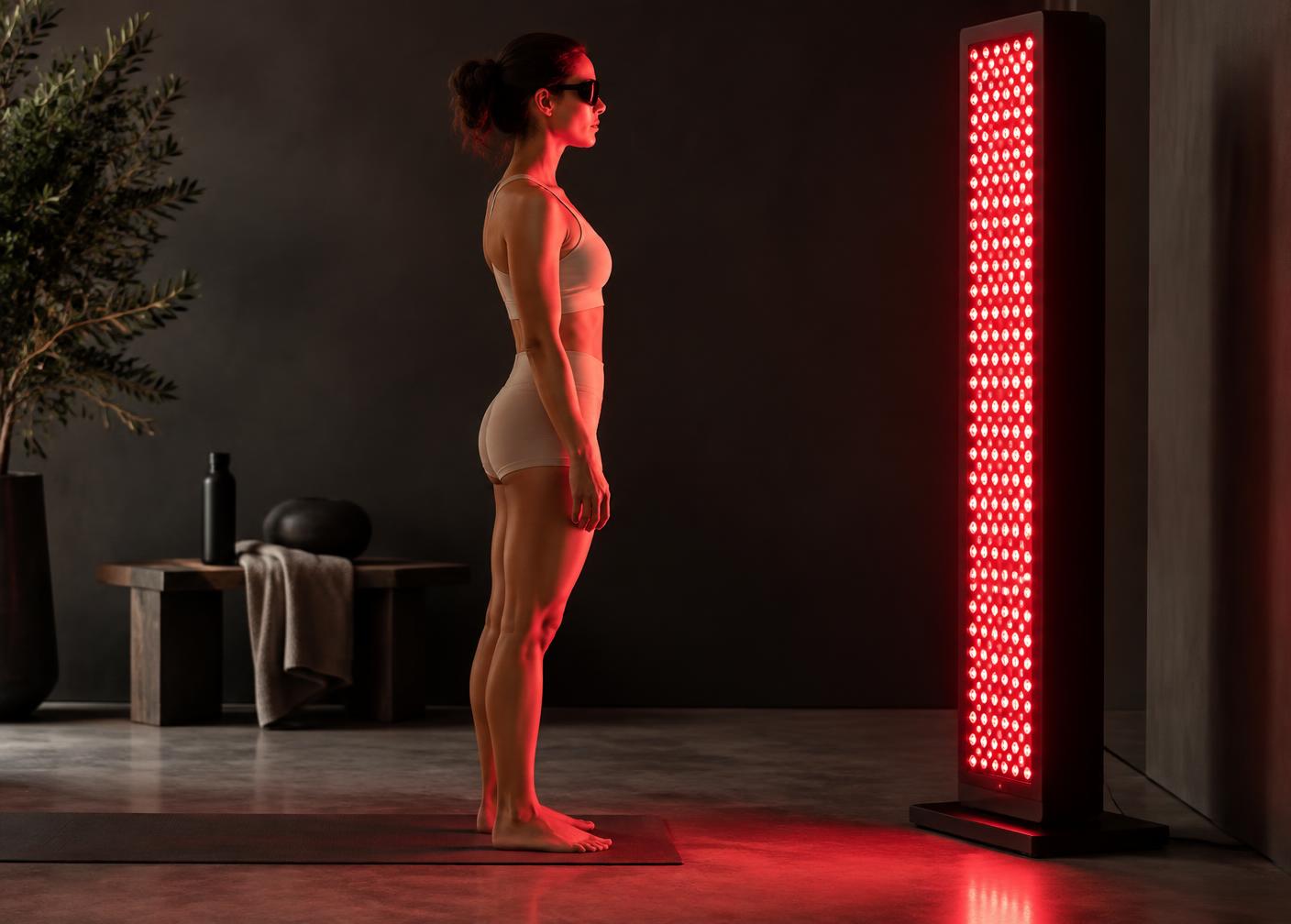
How red light therapy works: four variables per session.
Wavelength, irradiance, distance and time. Keep those consistent and every session is repeatable.
01
Choose the area
Face and skin need a small, even field. Back, legs and full-body sessions need a tall panel. Each product page lists the treatment area it covers.
02
Set your distance
Irradiance drops sharply with distance, so distance is part of the dose. 15–30 cm is typical for panels; every model lists measured irradiance there.
03
Set the timer
Five to fifteen minutes per area is a common starting point. Use the built-in timer rather than estimating so sessions stay comparable.
04
Repeat consistently
Three to five sessions a week is a common rhythm. Light therapy is a routine, not a single event.
Red or near-infrared?
Two wavelengths, two depths.
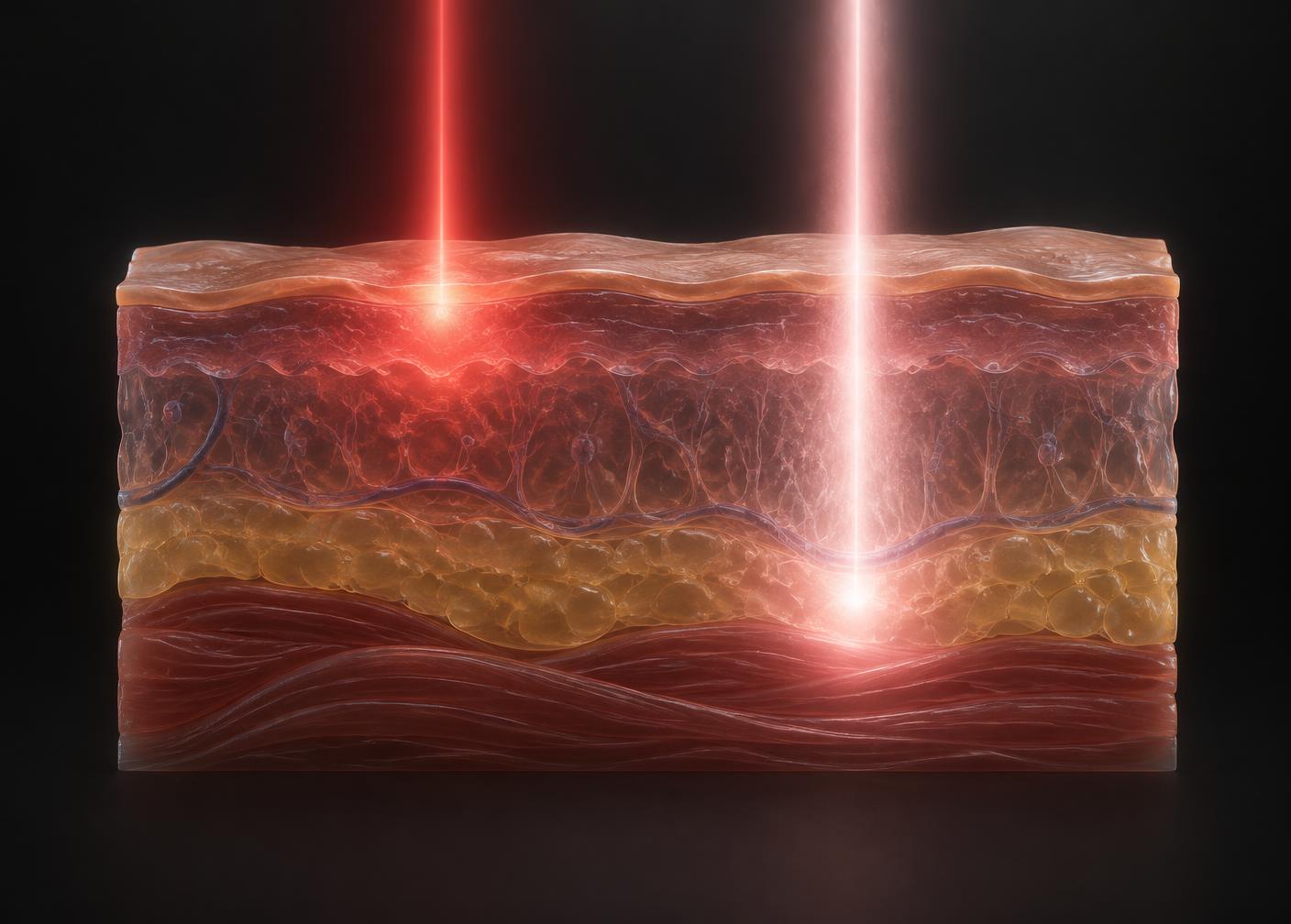
660nm red light is visible and absorbed close to the surface, which is why it is the wavelength usually chosen for skin and superficial tissue.
850nm near-infrared is invisible and travels further into tissue, which is why it is typically chosen for muscles and joints.
Most Lumora devices carry both and let you run them separately or together. Our seven- and eight-wavelength models add further bands for finer control.
Why it is worth it
Why people use red light therapy — and what it actually does.
Red light therapy — the technical name is photobiomodulation — means exposing your body to specific wavelengths of red and near-infrared light. It is not heat, not UV, and there is nothing to feel apart from warmth on the skin.
The idea is straightforward. Mitochondria are the parts of your cells that turn nutrients into energy. Red light around 660nm is absorbed close to the skin surface, while near-infrared light around 850nm is invisible and reaches deeper into muscle and joint tissue. Both are absorbed by the mitochondria, and researchers describe this as supporting normal cellular energy production — a little like the way plants use light.
Light therapy is not new. Niels Finsen received the Nobel Prize in Medicine for phototherapy in 1903, LED-based work grew through the 1960s to 1990s, and 660nm and 850nm are today the two most studied wavelengths, with thousands of published papers behind them.
- 01
Recovery after training
Muscle tissue is unusually rich in mitochondria, which is why athletes and active people use light therapy around training to support recovery between sessions.
- 02
Everyday joint and muscle comfort
Near-infrared light reaches deeper than visible red. It is the wavelength people choose for stiff shoulders, knees, hips and the lower back after long days or hard workouts.
- 03
Skin appearance
Red wavelengths are absorbed in the upper layers of the skin, where they are associated with collagen production — the protein behind firmness and elasticity.
- 04
Circulation and warmth
Sessions are commonly described as improving local blood flow and leaving the treated area pleasantly warm and relaxed.
- 05
Winding down and sleep routine
Red light contains no blue light, so an evening session fits a calm routine rather than working against it. Many owners run their session before bed.
- 06
A habit you actually keep
Ten minutes, three to five times a week, at home. No appointments, no consumables — the reason most people buy a device rather than book studio sessions.
Lumora devices are wellness products for general home use. They are not medical devices and nothing here is a promise of a medical outcome. If you have a health condition, are pregnant or take light-sensitising medication, speak to your doctor first.
Lumora devices are wellness products. They are not medical devices and are not intended to diagnose, treat or cure any condition. If you are pregnant, photosensitive, taking photosensitising medication or under medical care, speak to your doctor first.